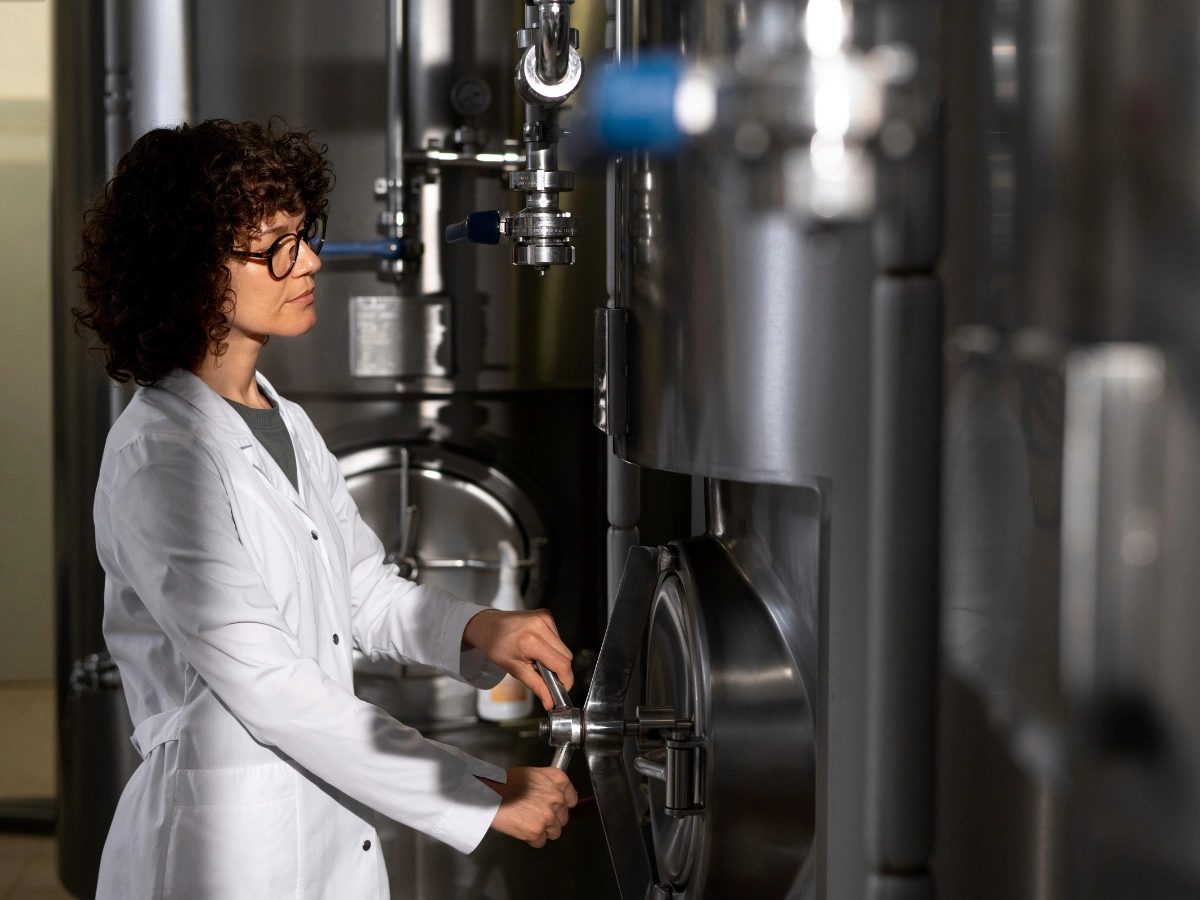
There was a time when owning your production line was a mark of industrial credibility in Pakistan.
A factory floor humming with proprietary blending tanks, packaging lines, and quality control labs meant you were serious. Today, that thinking is quietly but decisively shifting and the businesses making the change earliest are reaping measurable cost advantages.
Across sectors from paints and coatings to pharmaceuticals and industrial adhesives, Pakistani manufacturers are re-examining a simple but powerful question: does it make more financial sense to produce in-house, or to partner with specialists who already have the infrastructure, licences, and expertise?
Increasingly, the answer points towards toll manufacturing and specifically, towards third-party chemical blending Pakistan providers that can handle production on a contract basis, freeing businesses to focus on sales, distribution, and growth.
This shift is not simply a cost-cutting measure. It represents a fundamental rethink of where value is created in a manufacturing business, and why capital tied up in equipment and facilities might be better deployed elsewhere.
The Old Model: Why In-House Production No Longer Adds Up
Running a chemical production facility in Pakistan carries costs that compound quietly. Energy bills, regulatory compliance, machinery maintenance, raw material storage, skilled labour retention, and the ever-present risk of equipment downtime each is manageable on its own, but together they form a significant overhead that eats into margins every single month.
For small and mid-sized enterprises, the challenge is sharper still. A company producing 10,000 litres of a specialised coating per month cannot justify the capital expenditure for industrial-grade blending infrastructure designed to run at ten times that volume. The equipment sits underutilised, the fixed costs remain fixed, and the business finds itself competing at a structural disadvantage.
That is precisely the opening that toll manufacturing fills. Rather than owning the means of production, a business contracts a third party to manufacture its products using its formulations, under its quality standards, and to its delivery schedule. The result is a leaner operation with dramatically lower capital requirements and far greater flexibility to scale.

What Third-Party Chemical Blending Pakistan Providers Actually Offer
The term ‘toll manufacturing’ can obscure what is actually a fairly practical arrangement.
A business provides the formulation and specification; the toll manufacturer provides the facility, equipment, labour, and often the raw material sourcing. The final product is branded and owned by the client the manufacturer simply performs the production function.
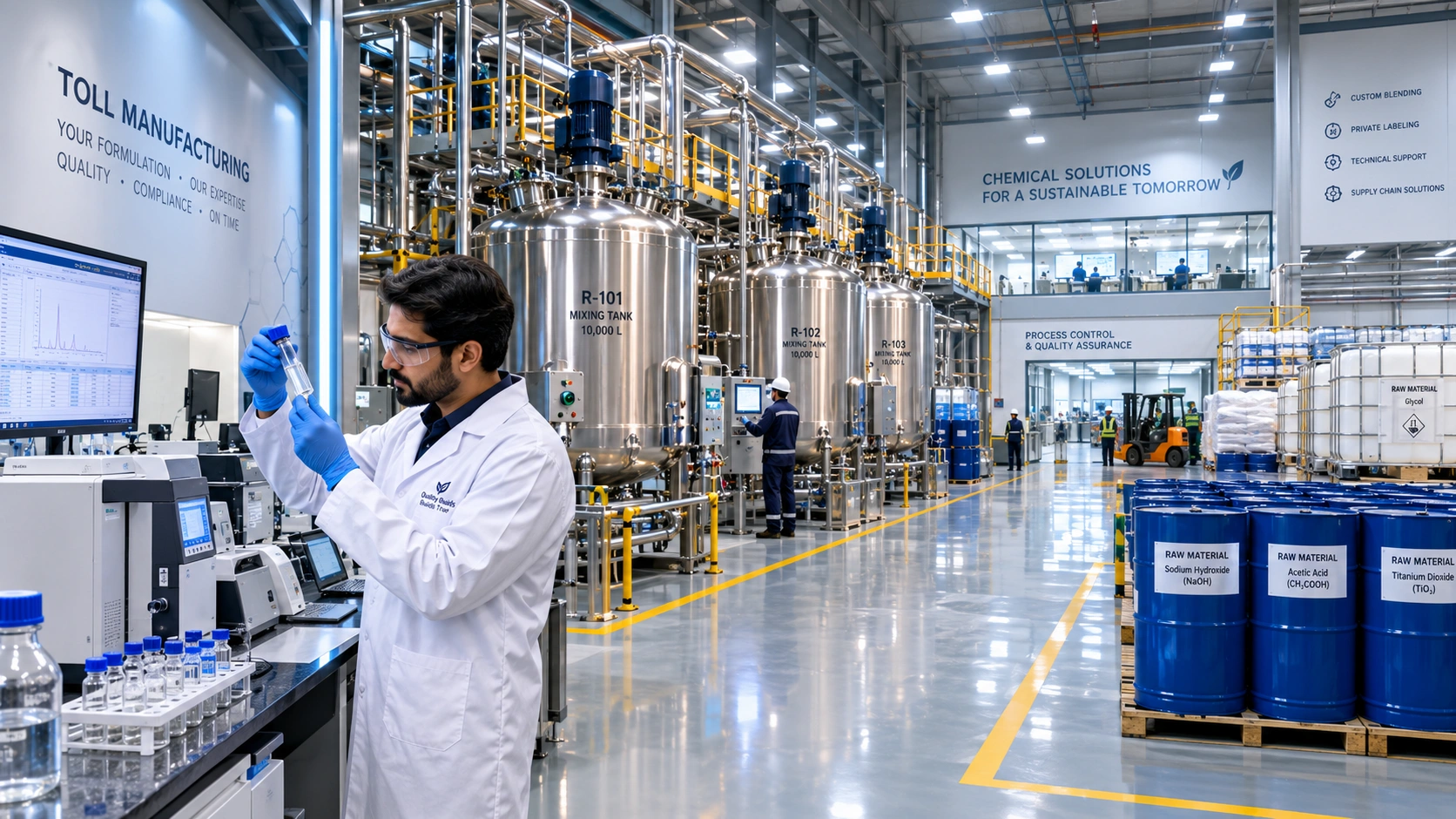
In the chemical sector, third-party chemical blending Pakistan facilities offer services ranging from straightforward mixing and dispersion through to complex multi-stage reactive blending, temperature-controlled processing, and specialised packaging.
The best operators have invested in equipment that most individual businesses could not justify purchasing outright: high-shear mixers, automated dosing systems, inert atmosphere processing capabilities, and certified clean-room environments.
For companies working with hazardous or technically demanding chemistries, the safety and compliance infrastructure maintained by experienced toll manufacturers is itself a significant value. Licences, inspections, environmental permits, and trained safety personnel represent years of investment and all of that is effectively shared when you work with an established Industrial Blending Solutions Pakistan provider.
Karachi, Lahore, and the Geography of Contract Manufacturing
Nitrocellulose Solution Manufacturing in Karachi
Karachi has long been Pakistan’s industrial heartland, and its chemical manufacturing sector reflects that history. The city hosts some of the country’s most technically sophisticated production facilities, including those involved in nitrocellulose solution manufacturing Karachi a specialised process used in lacquers, wood coatings, printing inks, and leather finishing.
Nitrocellulose processing requires careful handling of flammable solvents, precise viscosity control, and strict compliance with both local and international safety standards.
These are exactly the kinds of technically demanding processes where toll manufacturing makes the most sense: the infrastructure cost is high, the regulatory requirements are stringent, and the expertise needed is specialised. Partnering with an established Karachi-based producer allows a business to access that capability without building it from scratch.
Contract Chemical Packaging in Lahore
Lahore’s manufacturing base, meanwhile, has developed particular strength in consumer and industrial goods, and with it a growing ecosystem of contract chemical packaging Lahore providers. Packaging is often underestimated as a cost driver, but for chemical products it involves far more than filling containers. Compatibility testing, correct labelling under PSQCA and international standards, tamper-evident sealing, hazardous goods classification, and final quality checks all form part of the packaging workflow.
Outsourcing packaging to a dedicated contract facility in Lahore allows businesses to achieve professional, compliant packaging at a fraction of the cost of running their own packaging line particularly for companies whose volumes fluctuate seasonally or whose product portfolio is diverse.
The Financial Case: Where the Savings Come From
Reducing Industrial Energy Costs in Pakistan
Energy is one of the most discussed cost pressures facing Pakistani industry in 2026. Commercial and industrial electricity tariffs have risen substantially, and many manufacturers are finding that energy costs now represent 15–25% of their total production overhead, depending on the process intensity.
Toll manufacturers, operating at scale with modern equipment, are significantly better positioned to manage these costs.
Larger facilities can justify investment in energy-efficient machinery, solar installations, and load management systems that spread fixed energy infrastructure costs across a much higher production volume.
For a business producing in-house at modest volumes, reducing industrial energy costs Pakistan represents a genuine competitive challenge one that largely disappears when production is outsourced to a toll manufacturer running at optimised utilisation rates.
Toll Manufacturing Tax Benefits in Pakistan
The tax dimension of toll manufacturing is frequently overlooked in initial assessments, but it can be substantial. Under Pakistan’s current tax framework, businesses that contract out manufacturing may qualify to structure agreements in ways that reduce their exposure to certain categories of industrial tax, particularly where the toll manufacturer operates in designated industrial zones or holds specific licences.
Toll manufacturing tax benefits Pakistan include the ability to classify certain payments as service expenses rather than production costs, which can affect taxable income calculations.
Additionally, businesses that reduce their fixed asset base — by not owning production equipment may see improvements in their asset-to-income ratios that affect how they are assessed under various tax instruments.
Anyone considering this route should work with a qualified tax adviser to map the specific implications for their business structure, but the opportunities are real and worth investigating early.
Who Is Using Toll Manufacturing in Pakistan Right Now?
The adoption of contract and toll manufacturing in Pakistan cuts across a broader range of industries than many realise. Paints and coatings manufacturers were among the earliest adopters the chemistry is demanding, raw material costs are volatile, and the range of product variants required by the market makes in-house production of the full range economically inefficient.
Pharmaceutical companies use contract chemical manufacturing for active ingredient processing and for the production of excipients and intermediates that feed into their primary manufacturing process.
The agricultural chemicals sector a significant and growing part of Pakistan’s industrial economy relies heavily on third-party chemical blending Pakistan providers for pesticide formulations, fertiliser additives, and soil treatment products, where the cost of maintaining compliant blending facilities in-house would be prohibitive for all but the largest producers.
Industrial adhesives, cleaning chemicals, lubricants, and specialty coatings for textile and leather applications are all areas where outsourcing to a specialist Chemical Contract Manufacturing Experts delivers both cost and quality advantages.
The common thread is complexity: wherever a product requires technical expertise, specialised equipment, or compliance infrastructure that a business cannot efficiently justify owning, toll manufacturing becomes the rational choice.
Scalability and Flexibility: The Strategic Advantage
One of the most practical advantages of toll manufacturing is the ability to scale production up or down without the friction and cost that in-house capacity changes require.
For a business launching a new product, this is particularly valuable: initial volumes may be modest, but a successful product could require ten times the production volume within 18 months.
A business running its own production line faces a difficult choice at that point invest in additional capacity (expensive and slow) or cap growth (damaging). A toll manufacturing arrangement, by contrast, typically allows volume increases to be negotiated and accommodated within the existing relationship, often within weeks rather than months.
The flexibility argument also runs in the other direction. Market conditions change, product lines are discontinued, and businesses pivot.
A company tied to a large capital investment in production infrastructure carries that fixed cost even when the output it was designed for is no longer required. Businesses that have outsourced production to a toll manufacturer can wind down or redirect that volume with far less financial consequence.
For businesses committed to long-term growth, adopting Sustainable Manufacturing Practices Pakistan through toll partnerships also offers an increasingly important ESG dimension. Shared facilities mean shared investment in energy efficiency, waste treatment, and emissions reduction costs that would fall entirely on the individual business in an in-house model.
Why 2026 Is the Right Moment to Make the Move
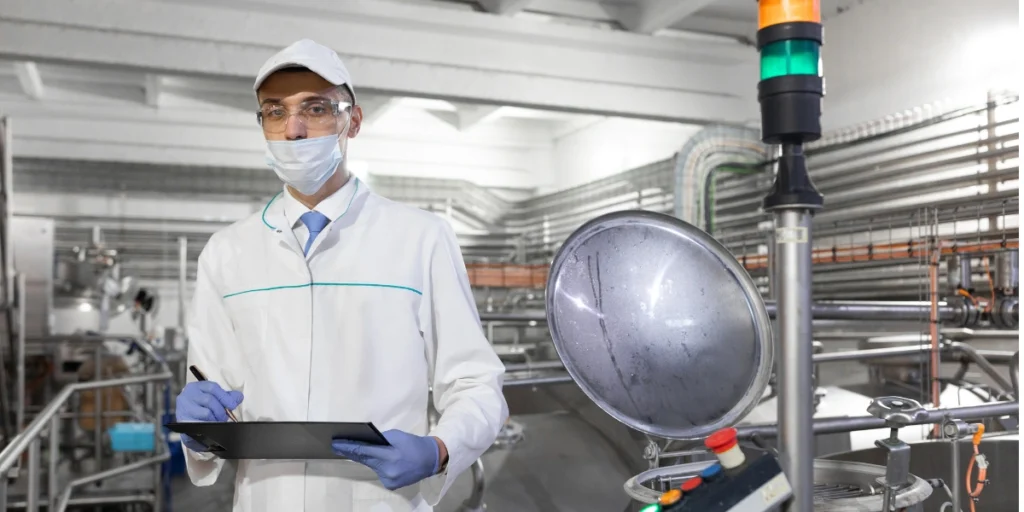
The conditions driving adoption of toll manufacturing in Pakistan have been building for several years, but 2026 represents something of an inflection point. Energy cost pressures are not easing.
Regulatory complexity around chemical manufacturing continues to grow. And the ecosystem of capable, professionally run toll manufacturers has matured to a point where businesses across most sectors can find credible partners.
Critically, the businesses that adopt this model early capture a compounding advantage. They free up capital that competitors are tying up in plant and equipment. They access expertise and infrastructure that takes years to build internally.
And they develop supply chain relationships and production knowledge that become increasingly difficult for later movers to replicate quickly.
Third-party chemical blending Pakistan has moved from a niche solution used by only the most resource-constrained businesses to a mainstream strategic choice made by forward-thinking operators across the industrial spectrum.
The question for Pakistani businesses today is not whether toll manufacturing makes sense in general — the evidence is clear that it does but whether a specific business is structured to take advantage of it, and which partners are best placed to deliver the required capability.
Choosing the Right Toll Manufacturing Partner
Not all toll manufacturers are equal, and the choice of partner matters significantly. Key considerations include the partner’s technical capability and the range of chemistries they have demonstrated experience with, their quality management systems and certification status, their track record on delivery reliability, and their financial stability as a long-term business.
Transparency matters too. A strong toll manufacturing partner will be open about their processes, their raw material sourcing, their testing protocols, and any limitations in their capability.
Businesses should be cautious about partners who are reluctant to demonstrate their operations or who cannot provide clear documentation of their quality and safety systems.
For businesses requiring Bulk Chemical Production Services at scale, the partner’s logistics capability their ability to receive raw materials, manage inventory, and deliver finished goods reliably and safely is as important as their technical skill. Production quality means little if delivery is inconsistent.
The Bottom Line
The rise of toll manufacturing in Pakistan is not a passing trend it is a structural response to the real economic pressures facing industrial businesses in 2026.
Rising energy costs, tightening regulation, capital constraints, and the demands of an increasingly competitive market are all pushing in the same direction: towards leaner, more flexible operating models where production is handled by specialists and business owners focus on what they do best.
Third-party chemical blending Pakistan providers, contract packaging specialists in Lahore, and technically sophisticated chemical manufacturers in Karachi represent a growing ecosystem of capability that Pakistani businesses can access today.
The overhead savings are real, the scalability benefits are tangible, and the competitive advantage of moving early is significant.
The businesses that recognise this shift and act on it are not outsourcing their quality or their responsibility they are outsourcing complexity, and keeping the value where it matters most.