If you formulate paints, lacquers, or wood coatings, you have likely run into two terms that sound similar but do very different jobs in a finished product: NC resins and nitrocellulose (NC) solutions. Picking the wrong one, or blending them in the wrong ratio, can leave you with slow drying times, poor adhesion, or a finish that never quite hits the gloss level your customer expects. This post breaks down what each material actually does, where they overlap, and how to decide which one belongs in your next batch.
What Nitrocellulose Solutions Do in a Coating
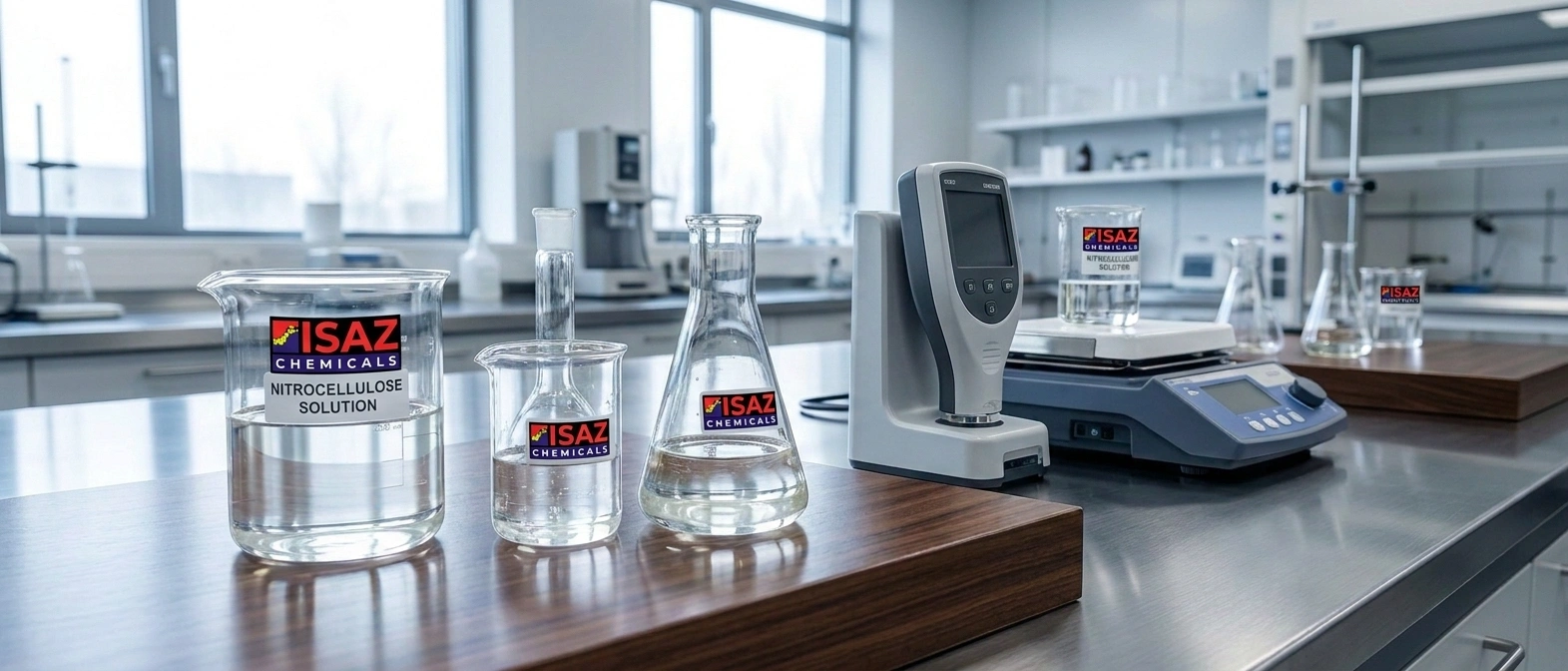
Nitrocellulose solutions are the film former in a huge share of lacquers, wood finishes, and industrial coatings. Once the solvent flashes off, the nitrocellulose left behind forms the actual protective film on the surface. That film is what gives a lacquer its fast dry time, its clarity, and its ability to be re-coated quickly without lifting the layer underneath.
- Fast, predictable drying, which matters on high-volume production lines
- Good clarity and gloss retention on wood and metal substrates
- Strong recoatability, so touch-ups blend in cleanly
- A long track record in furniture, automotive refinish, and general industrial coatings
The trade-off is flexibility and impact resistance. On their own, straight nitrocellulose films can be brittle, especially in colder climates or on substrates that flex or expand.
What NC Resins Add to the Mix
NC resins are typically blended into a nitrocellulose system to correct exactly that weakness. They improve flexibility, adhesion, and hardness balance, and they can also help control gloss level and build. Formulators reach for NC resins when a straight nitrocellulose solution is either too brittle for the application or when the finish needs better chemical and abrasion resistance than nitrocellulose alone can deliver.
- Improved flexibility, which reduces cracking on substrates that move or flex
- Better hardness and abrasion resistance for high-contact surfaces
- More control over gloss and film build across different formulations
- Compatibility with a wider range of plasticizers and modifying resins
Where the Two Overlap
In practice, most commercial lacquer systems are not purely one or the other. A nitrocellulose solution usually forms the backbone of the film, while an NC resin is added in a smaller ratio to fine-tune performance. The right balance depends on the substrate, the climate the finished product will live in, and the mechanical stress the coating needs to survive.
How to Decide Which One Fits Your Formula
A few questions can point you in the right direction before you run a trial batch:
- What substrate are you coating? Rigid substrates like most furniture panels tolerate straight nitrocellulose well. Flexible or high-movement substrates usually need an NC resin blend for durability.
- What is the end-use environment? Products exposed to temperature swings, humidity, or frequent handling benefit from the added flexibility and hardness balance NC resins bring.
- What gloss and film build do you need? NC resins give you more room to adjust gloss and build without sacrificing dry time.
- What is your production speed? If line speed is the priority, a nitrocellulose-heavy formula will usually dry faster.
How ISAZ Chemicals Supports Formulators
At ISAZ Chemicals, we supply both nitrocellulose solutions and NC resins to paint, lacquer, and coatings manufacturers across Pakistan, and we work with formulators to find the right ratio for their specific application rather than pushing a one-size-fits-all product. If you are not sure where your current formula sits on the flexibility-versus-speed spectrum, our team can review your specifications and recommend adjustments based on the substrate and performance requirements you are working with. See also our breakdown of why high-quality NC solutions matter for finished coatings.
Frequently Asked Questions
Can I use NC resins without nitrocellulose solution in the formula?
It is possible in some specialty applications, but most commercial lacquer and coating systems use nitrocellulose solution as the primary film former and NC resin as a modifier, not a replacement.
Do NC resins slow down drying time?
They can, depending on the ratio used. This is why formulators typically test small-batch ratios before scaling to full production runs.
Does ISAZ Chemicals supply both products for the same order?
Yes. We supply nitrocellulose solutions and NC resins together, and can advise on blend ratios based on your target substrate and finish requirements.
Is one option more cost-effective than the other?
Pricing depends on grade and volume. In general, straight nitrocellulose solutions cost less per kilogram, but the total cost of a finish also depends on rework, recoats, and product returns caused by durability issues, which is where NC resins often pay for themselves.
Want help matching a nitrocellulose or NC resin grade to your formula? Send us your current specifications and we will walk you through the options.