Handing your production over to someone else’s plant means trusting equipment you have never operated and people you did not hire. Most buyers do some due diligence before signing, but it is often limited to a phone call and a look at a few sample certificates of analysis. That is not enough, especially if you are planning to run meaningful volume through a facility for years. Here is what an actual audit should cover.
Start with paperwork, before you even schedule a visit
Ask for copies of every license and registration relevant to what you are producing, not just a general manufacturing license. We covered the specific list in our post on what licenses a toll manufacturer should hold. If a toller is slow to produce these or gives vague answers about “working on renewal,” treat that as a warning sign rather than a minor delay.
Ask to see the lab, not just the certificates it produces
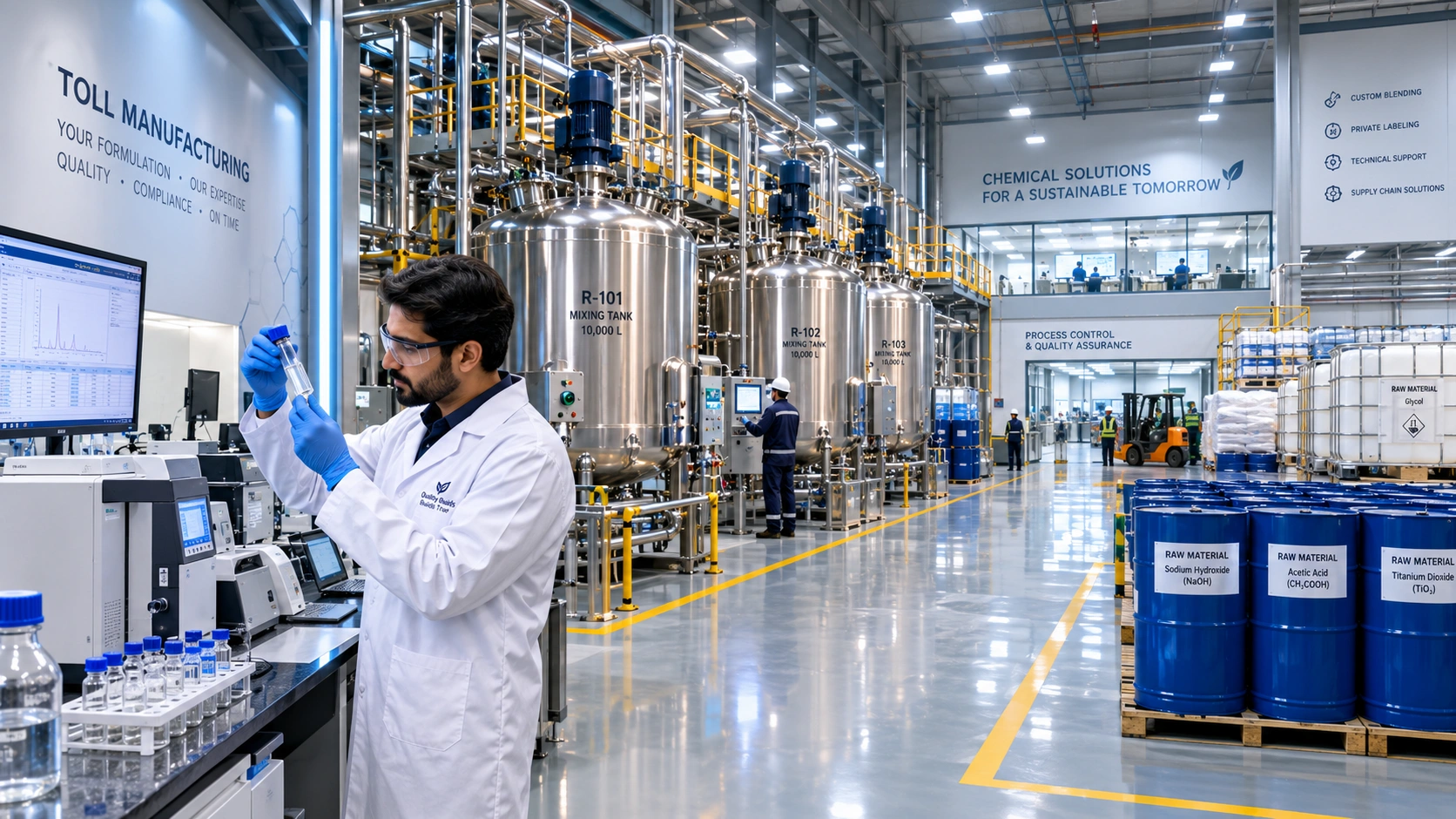
A certificate of analysis is only as good as the lab and the equipment that generated it. Ask what instruments they use for the tests that matter to your product, such as viscosity, solids content, or particle size, how often those instruments are calibrated, and whether calibration records are available for review. We walk visitors through exactly this in our piece on how our quality control lab tests every batch, and any toller worth working with should be equally willing to show you theirs.
Check batch traceability
Ask a toller to pull the full batch record for a product they made six months ago, on the spot, during your visit. Can they trace which raw material lot went into it, who signed off on each production step, and where that specific batch shipped? A facility that scrambles to answer this in real time will struggle if you ever need to trace a quality complaint back to its source.
Walk the floor with a specific list, not a general impression
A clean-looking facility tells you less than you would think. Look for specifics: are raw materials labeled and stored separately from finished goods, is there a real system for segregating different products to avoid cross-contamination, are safety data sheets posted and current, do operators appear to be following written procedures rather than working from memory. Ask questions during the walk rather than saving them for afterward. How a plant manager answers an unscripted question on the floor tells you more than a rehearsed tour script.
Talk to an existing client if you can
Reference calls are underused in this industry. A toller confident in their work will connect you with a current client, or at least point you to a documented case study. Our case study on a paint manufacturer we worked with covers what that relationship actually looked like day to day, including where we had to adjust our process to meet their spec.
Red flags worth walking away from
A few things should end the conversation regardless of how good the pricing looks: refusal to let you visit the actual production floor, no written quality specifications for past work, inability to produce calibration or batch records on request, and pressure to sign a long-term contract before you have seen the facility in person. None of these are dealbreakers because of bad luck. They are dealbreakers because they predict how the relationship goes once you have already committed volume.
Frequently asked questions
Should I visit a toll manufacturer’s facility before signing a contract?
Yes, whenever possible. A phone call and sample certificates cannot substitute for seeing the production floor, lab, and storage areas in person, especially for any volume beyond a small trial run.
What documents should a toll manufacturer be able to produce on request?
At minimum: current manufacturing licenses, calibration records for lab and production instruments, batch records for past production runs, and safety data sheets for the materials they handle. Slow or evasive answers on any of these are worth taking seriously.
How do I know if a toll manufacturer’s quality control is actually reliable?
Ask to see the lab in person rather than relying on certificates alone, and request a real batch record from a past run to check traceability. A facility with nothing to hide will generally be willing to show both without much friction.