
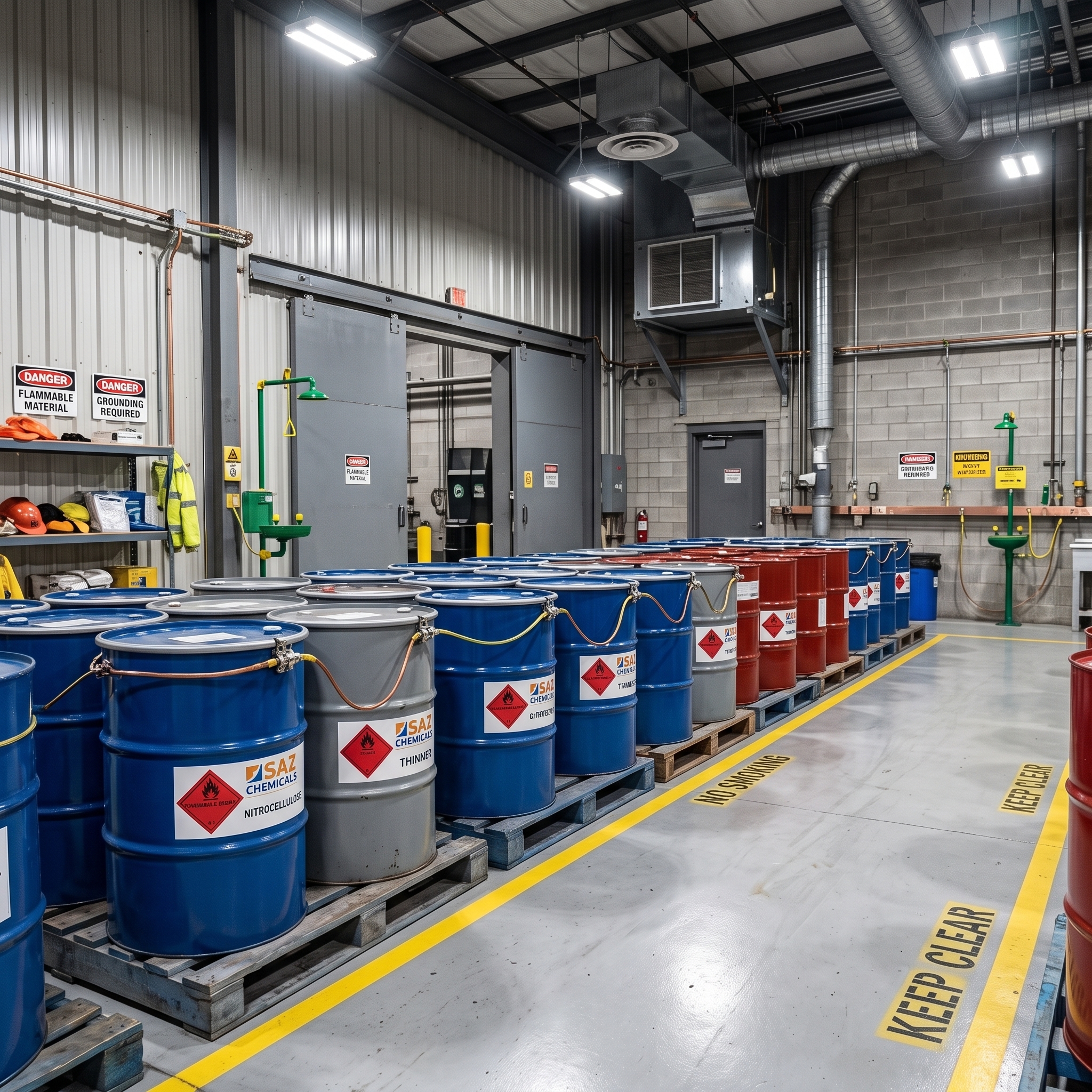
Nitrocellulose and NC thinner are part of daily work in paint, lacquer, ink, and cosmetics plants. Most factories handle them for years without a problem. But when things go wrong with flammable materials, they go wrong fast. A single drum stored near a heater, or a spark from an ungrounded pump, can turn into a serious fire.
The good news is that safe handling is not complicated. It comes down to a handful of habits, done every day. This guide covers the basics every plant manager and supervisor should have in place.
Know what you are handling
Nitrocellulose is highly flammable when dry. That is why it is supplied wetted with alcohol or water, or already dissolved as a solution. The wetting agent is what keeps it stable. The most important rule is simple: never let nitrocellulose dry out.
NC thinner is a blend of solvents such as acetates, alcohols, and aromatics. It evaporates quickly, and its vapors are heavier than air. They can travel along the floor to a spark or flame some distance away.
Before anything else, make sure the Safety Data Sheet (SDS) for every product is printed, filed, and easy to find. The SDS from your supplier is the official reference for storage, fire fighting, and first aid. This guide supports it but does not replace it.
Storage rules
- Store in a dedicated area. Use a separate, well-ventilated store for flammables, away from offices, boilers, and electrical panels.
- Keep it cool and shaded. Heat speeds up evaporation and can dry out wetted nitrocellulose. Avoid direct sunlight and hot roofs, which matter a lot in Pakistan’s summer.
- Keep containers closed. Close drums and cans tightly after every use, so the wetting agent and solvents stay in.
- Keep incompatible materials apart. Store away from strong acids, alkalis, and oxidizing agents.
- Use first in, first out. Nitrocellulose has a shelf life. Use older stock first and check dates on every drum.
- Limit stock on the shop floor. Keep only what is needed for the shift near production. Everything else stays in the store.
- Mark the area clearly. Use flammable warning signs and a strict no-smoking rule.
Safe handling during production
- Ground and bond everything. Pumps, drums, tanks, and transfer lines should be earthed. Static electricity from pouring solvents is a common, hidden source of ignition.
- Use spark-proof tools and flameproof electrical fittings in areas where vapors may build up.
- Ventilate well. Good airflow keeps vapor levels low and protects workers’ health.
- Clean spills and residue straight away. Dried nitrocellulose residue on floors, walls, or equipment is a fire risk. Keep it wet and remove it.
- Never use compressed air to clean nitrocellulose dust or residue. It spreads fine particles and can create static.
Personal protective equipment (PPE)
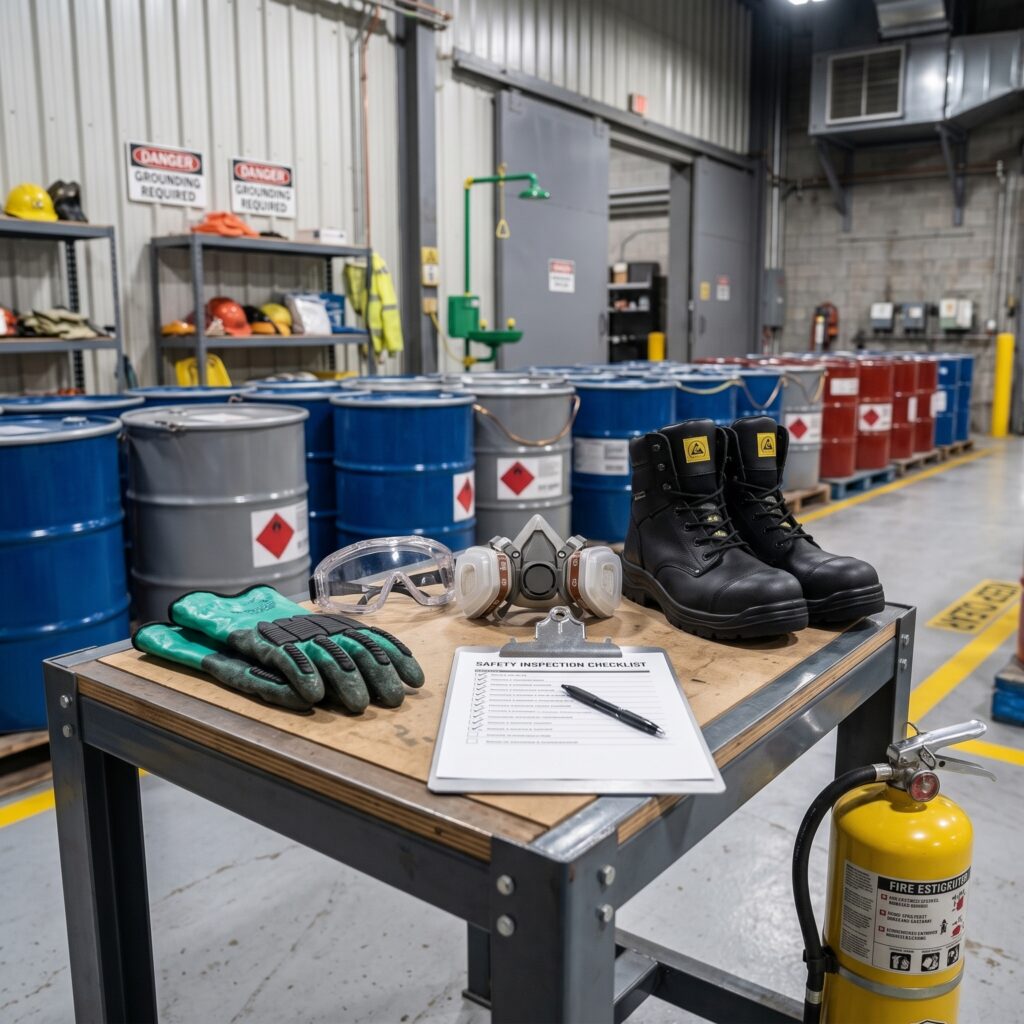
Every worker handling these materials should have:
- Chemical-resistant gloves
- Safety goggles or a face shield
- Cotton or flame-resistant work clothing (avoid synthetics that build static)
- A suitable respirator when ventilation is limited, as advised in the SDS
- Antistatic safety shoes where possible
Spills and fire response
For a small spill: remove ignition sources, ventilate the area, and keep spilled nitrocellulose wet. Collect it with non-sparking tools into a labeled container for proper disposal.
For a fire: nitrocellulose burns very fast and supplies some of its own oxygen, so smothering alone may not work. Supplier SDS documents generally advise using large amounts of water to cool and flood it. Solvent fires from thinner usually need foam, dry powder, or CO2. Always follow the SDS for each product, and call the fire brigade early. Do not let untrained staff fight a large fire.
Train your team, then train them again
The best storage room in the world will not help if staff do not know the rules. Hold short safety briefings for new workers, refresh training every few months, and run a fire drill at least once a year. Put the key rules on the wall where people work, in the language they speak.
A quick daily checklist
- ☐ All drums and cans closed and labeled
- ☐ No nitrocellulose residue drying on floors or equipment
- ☐ Grounding clips connected on transfer equipment
- ☐ Fire extinguishers in place and in date
- ☐ Store temperature normal and ventilation working
- ☐ Only today’s quantity on the shop floor
How ISAZ Chemicals helps
At ISAZ Chemicals, safety starts before the product reaches you. Our nitrocellulose solutions and NC thinners are packed in sealed, labeled containers and shipped with full documentation, including the SDS. Our team is also happy to advise on storage and handling for your specific plant.
Learn more about our nitrocellulose solutions and NC thinner, or contact us with your questions.
Frequently asked questions
Why is nitrocellulose shipped wet? Dry nitrocellulose is highly flammable. Wetting it with alcohol or water makes it much safer to transport and store.
Can nitrocellulose go bad? Yes. It has a limited shelf life and should be used on a first-in, first-out basis. Check the date on each drum.
What is the biggest fire risk in an NC plant? Common causes include static sparks during solvent transfer, dried residue, and storage near heat sources.
Where can I find the right fire fighting method? In the Safety Data Sheet supplied with each product. Keep it on file and train staff on it.