Nitrocellulose lacquer has been around since the 1920s, and it is still one of the most requested coatings we produce at ISAZ. That surprises people who assume anything invented before polyurethane and UV cure systems must be obsolete. It is not. NC lacquer survives because it dries fast, repairs easily, and gives a finish quality that newer chemistries still struggle to match in certain applications.
Furniture and wood finishing
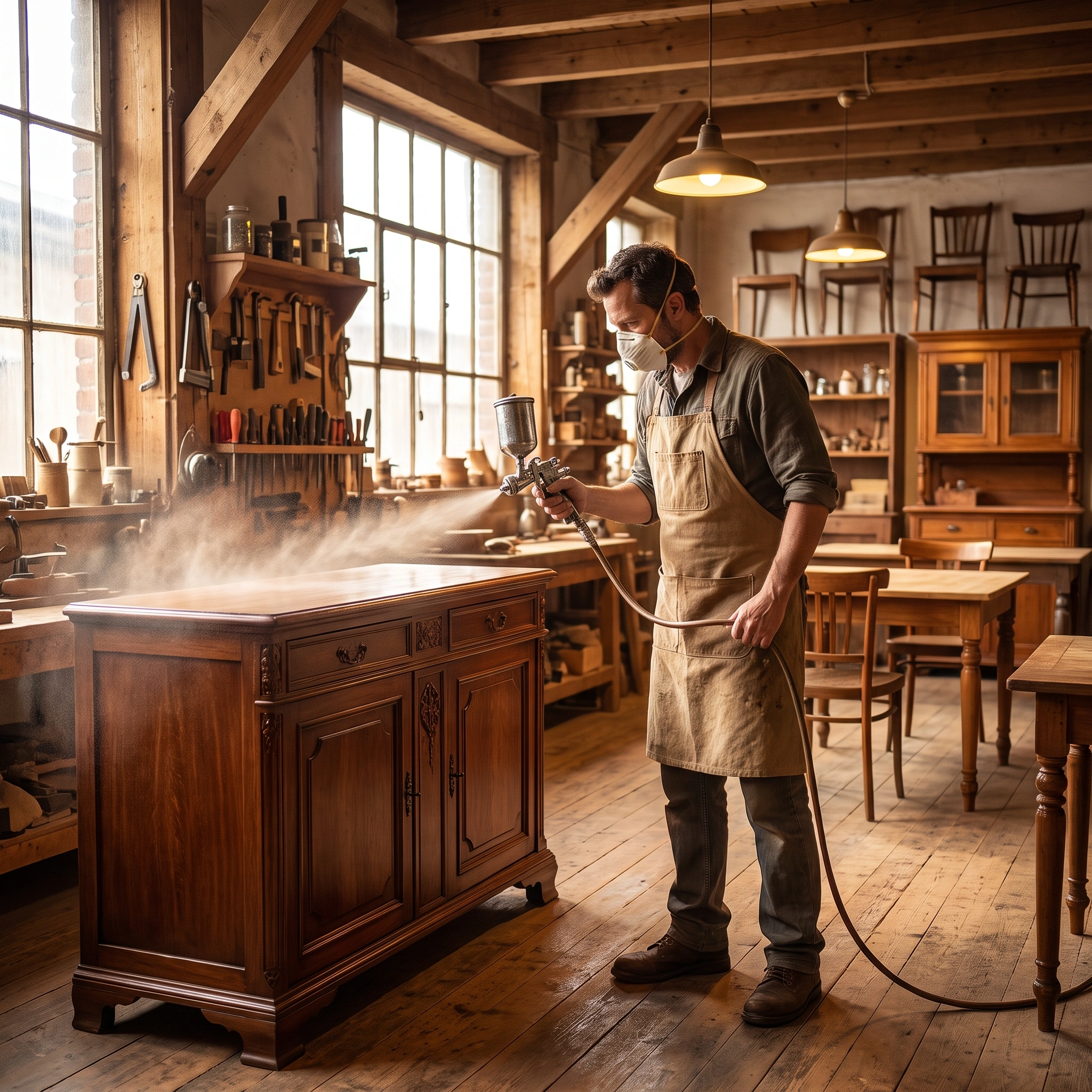
This is where NC lacquer still dominates. Furniture makers like it because it dries in minutes rather than hours, which matters when you are running multiple coats in a single shift. It also rubs out beautifully, meaning a finisher can sand and buff between coats to get a glass-smooth surface that conversion varnish and catalyzed finishes are harder to achieve without extra steps.
The other advantage is repairability. If a lacquer finish gets scratched or burned years later, a refinisher can often blend in a fresh coat and melt it into the existing film, because NC lacquer stays soluble in its own solvent even after full cure. Try that with a two-part polyurethane and you are stripping the whole piece.
Automotive refinish, mostly restoration work
Modern factory automotive finishes moved to basecoat and clearcoat urethane systems decades ago, largely because NC lacquer does not hold up to UV exposure and modern durability standards the way urethane does. But NC lacquer has not disappeared from the automotive world. Classic car restorers still specify it, both because it matches the original factory finish on pre-1960s vehicles and because touch-up work is far more forgiving. A shop doing concours-level restoration on a vintage car will often go out of their way to source NC lacquer rather than use a modern equivalent, purely to keep the finish period-correct.
Metal coatings and industrial touch-up
NC lacquer also shows up in general metal coating work, particularly where fast turnaround matters more than maximum chemical resistance: equipment touch-up, signage, some appliance components, and primer coats that get topcoated with something more durable later. It is not the right choice for anything facing constant outdoor UV or heavy chemical exposure, but for indoor metal parts that need a quick, presentable finish, it still gets specified regularly.
Choosing the right grade for the job
Not all NC lacquer performs the same, and the grade of nitrocellulose used changes drying speed, film hardness, and how well it rubs out. Higher viscosity grades give a thicker film build per coat but take longer to dry. Lower viscosity grades level faster and dry quicker but need more coats to build the same thickness. We cover the tradeoffs in more depth in our post on NC resins versus straight nitrocellulose solutions, which is worth reading before you finalize a formulation.
Sourcing consistent raw material
The biggest complaint we hear from formulators who have had a bad experience with NC lacquer is inconsistency between batches, usually traced back to variable raw nitrocellulose quality rather than the formulation itself. That is a sourcing problem, not a chemistry problem. Our guide to sourcing industrial grade nitrocellulose walks through what to check before committing to a supplier.
Why toll manufacturers still keep NC lacquer in their lineup
We get asked occasionally why we keep investing in NC lacquer capability when so much of the industry has moved toward waterborne and UV systems. The honest answer is that demand has not gone away. Furniture finishers, restoration shops, and touch-up applications keep ordering it, and buyers who need it in volume have a harder time finding a toller who still runs it well. More on that in our piece on what makes a reliable lacquer toll manufacturer.
Frequently asked questions
Is NC lacquer still used in the furniture industry?
Yes. It remains one of the most common finishes for wood furniture because it dries fast, rubs out to a high gloss, and can be repaired or blended years after the original application, which conversion varnish and catalyzed finishes cannot match as easily.
Why don’t car manufacturers use NC lacquer anymore?
Factory automotive finishes switched to basecoat and clearcoat urethane systems because they hold up better to UV exposure and meet modern durability requirements. NC lacquer is still used in classic car restoration, where matching the original factory finish matters more than long-term UV resistance.
What determines the drying speed of NC lacquer?
Drying speed depends mainly on the viscosity grade of nitrocellulose used and the solvent blend in the formulation. Lower viscosity grades and faster-evaporating solvents dry quicker, while higher viscosity grades build a thicker film per coat but take longer to flash off.