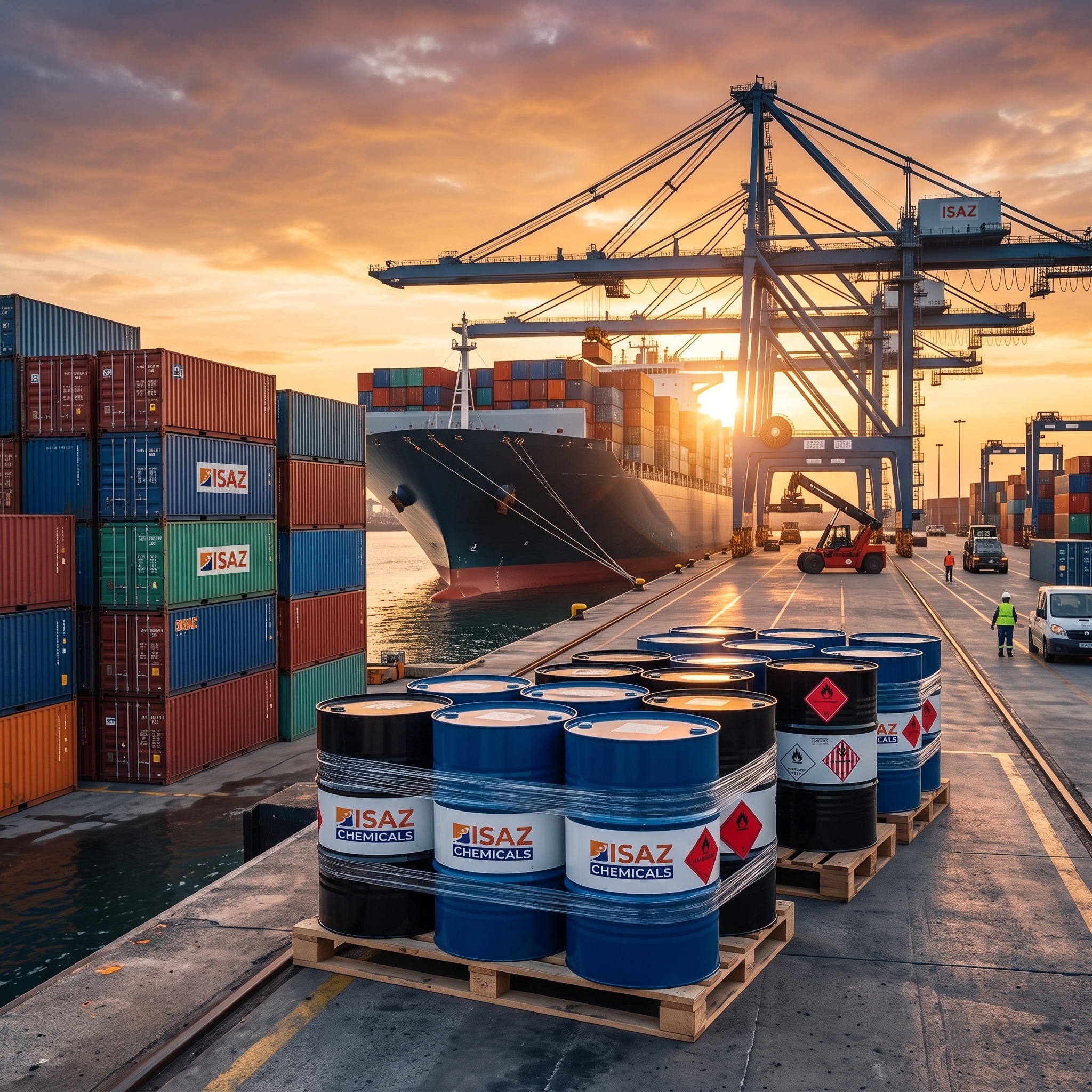
Ordering nitrocellulose from another country is not like ordering most raw materials. It is classed as a dangerous good, so every shipment has to follow strict international rules on how it is classified, packed, labeled, and documented. Get one detail wrong and your cargo can sit at the port for weeks, or be refused by the shipping line altogether.
If you are a buyer importing nitrocellulose, or thinking about switching to a new overseas supplier, this guide explains what happens behind the scenes and what you should expect from an exporter.
Why nitrocellulose is a dangerous good
Nitrocellulose is highly flammable, especially when dry. For that reason, it is never shipped dry for industrial use. It is wetted with alcohol or water, or dissolved into a solution, to keep it stable during transport. The form it ships in decides how it is classified.
Common UN numbers and classes
Under the UN system for dangerous goods, nitrocellulose products fall under a few main entries:
| Form | UN number | Hazard class |
|---|---|---|
| Nitrocellulose wetted with not less than 25% alcohol | UN 2556 | 4.1 (flammable solid) |
| Nitrocellulose wetted with not less than 25% water | UN 2555 | 4.1 (flammable solid) |
| Nitrocellulose with plasticizer (chips) | UN 2557 | 4.1 (flammable solid) |
| Nitrocellulose solution, flammable | UN 2059 | 3 (flammable liquid) |
The exact entry depends on the product’s composition, so it must match the Safety Data Sheet. Always confirm the classification with your supplier and freight forwarder for each product.
The rules that apply
- Sea freight follows the IMDG Code (International Maritime Dangerous Goods Code). Most nitrocellulose moves by sea, as it is the most practical and cost-effective route for these materials.
- Air freight follows the IATA Dangerous Goods Regulations. Air shipment of nitrocellulose is heavily restricted and often not possible, so plan for sea freight.
- Road transport to and from ports must follow local dangerous goods rules in both countries.
The destination country may also have its own import rules, such as chemical registration or import permits. Check these before you place the order, not when the cargo arrives.
Packaging and labeling
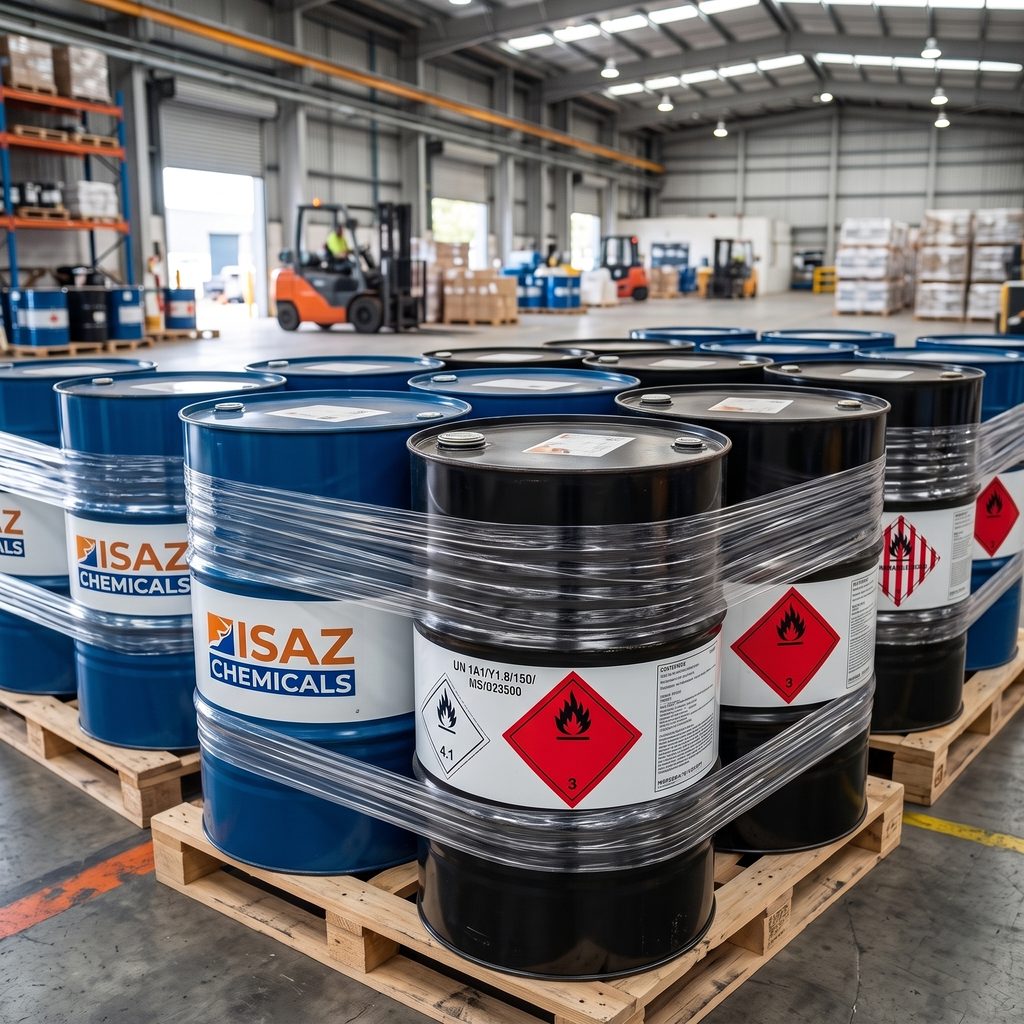
Dangerous goods must be packed in UN-certified packaging that has been tested for the type and weight of the product. For nitrocellulose, this usually means approved steel or fiber drums with liners, or approved containers for solutions.
Each package should carry:
- The UN number and proper shipping name
- The correct hazard class label (for example, class 4.1 or class 3)
- The UN packaging certification mark
- Shipper and consignee details
The shipping container itself also needs the correct placards on the outside. Poor labeling is one of the most common reasons dangerous cargo gets held at the port.
Export documents you should receive
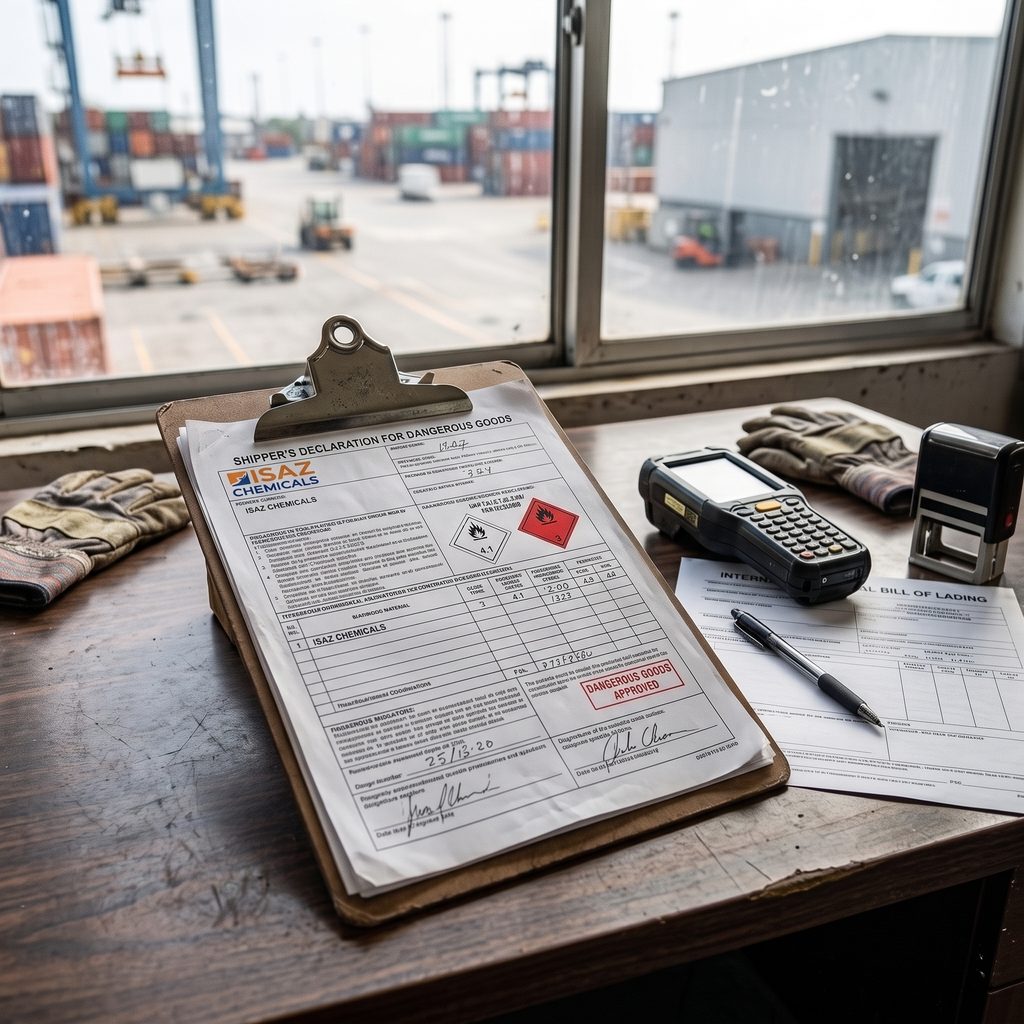
A well-organized exporter will send a full document set with every shipment. Here is what to expect:
- Commercial invoice: the sale value, terms, and product details.
- Packing list: the number of packages, weights, and marks.
- Safety Data Sheet (SDS): the 16-section safety document for the product.
- Dangerous Goods Declaration: the shipper’s formal statement that the cargo is correctly classified, packed, and labeled.
- Container packing certificate: confirms the container was loaded safely and correctly.
- Bill of lading: the shipping line’s receipt and title document for the cargo.
- Certificate of origin: often needed for customs and trade agreement duties.
- Certificate of analysis (CoA): confirms the batch meets your specification.
Missing or inconsistent documents cause most customs delays. Ask your supplier to share draft copies before the shipment leaves, so you can check them against your import requirements.
Tips for a smooth first order
- Agree on Incoterms early, so both sides know who handles freight, insurance, and port charges.
- Use a forwarder with dangerous goods experience. Not every forwarder or shipping line accepts class 4.1 cargo.
- Allow extra time. Dangerous goods bookings can take longer to confirm than normal cargo.
- Check your storage before arrival, so the material goes straight into a safe, approved store.
Exporting nitrocellulose from Pakistan with ISAZ
ISAZ Chemicals manufactures and exports nitrocellulose solutions and NC-based products from Pakistan to buyers abroad. We handle classification, UN-approved packaging, labeling, and the full export document set, and we coordinate with experienced dangerous goods forwarders out of Karachi.
If you are looking for a reliable nitrocellulose supplier and exporter, get in touch with our team to discuss your requirements and request a quote.
Frequently asked questions
What is the UN number for nitrocellulose? It depends on the form. Common entries are UN 2556 (wetted with alcohol), UN 2555 (wetted with water), UN 2557 (with plasticizer), and UN 2059 (solution).
Can nitrocellulose be shipped by air? Air transport is heavily restricted and often not allowed. Sea freight is the usual route.
Why is my nitrocellulose shipment held at customs? The most common causes are missing documents, labeling errors, or an import permit that was not arranged in advance.
What documents do I need to import nitrocellulose? At minimum: commercial invoice, packing list, SDS, Dangerous Goods Declaration, and bill of lading. Your country may require more.