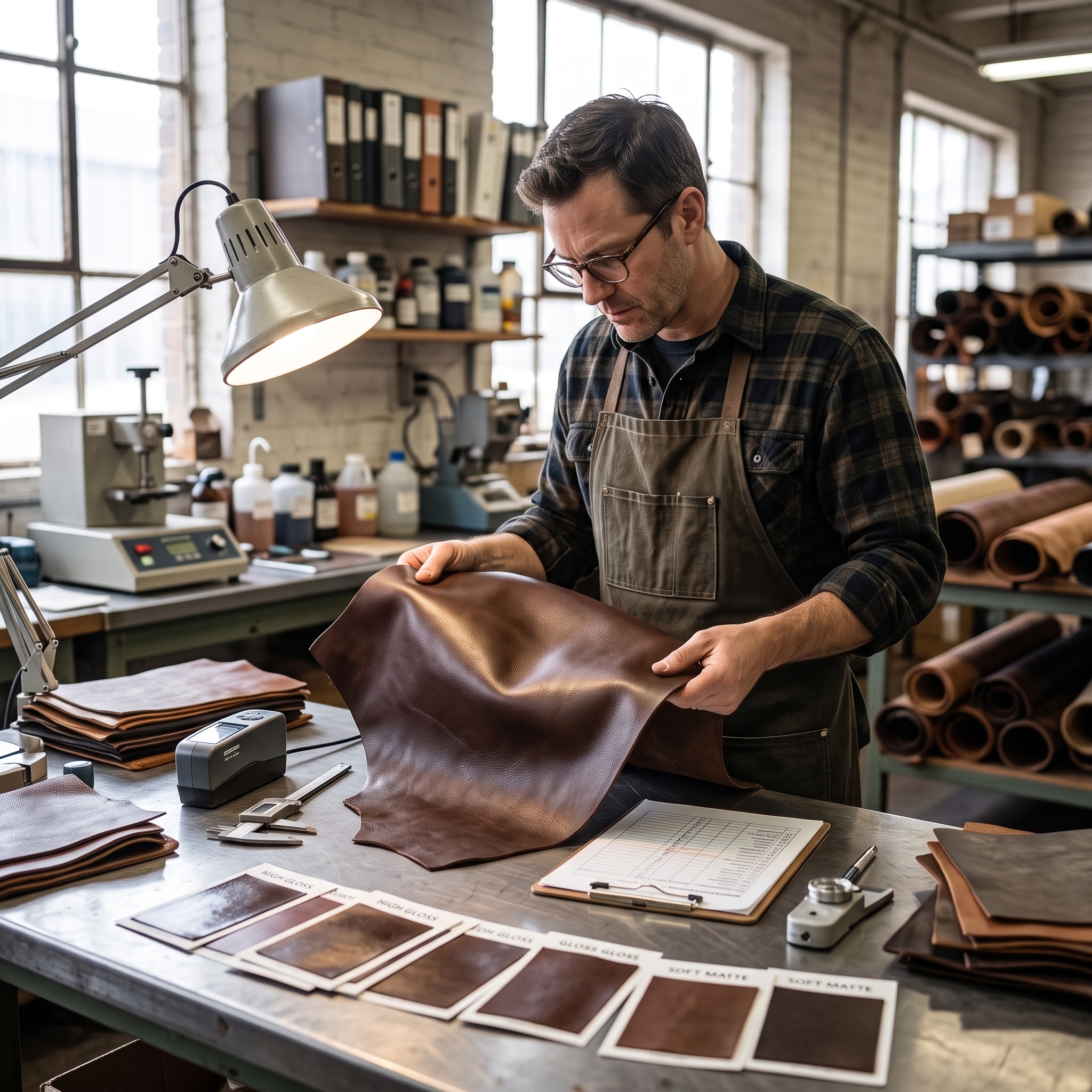
A buyer picks up a leather jacket, a handbag, or a pair of shoes. Within a second they have judged it. Does it shine the right way? Does it feel soft or plasticky? Will it crack where it bends? Much of that judgment comes down to the last layer applied in the tannery: the top coat.
For decades, nitrocellulose (NC) lacquers have been one of the most common top coats in leather finishing. They are fast, versatile, and give a finish that is hard to match on feel. This article explains how NC lacquers work on leather, and how to choose the right one for each type of product.
What the top coat actually does
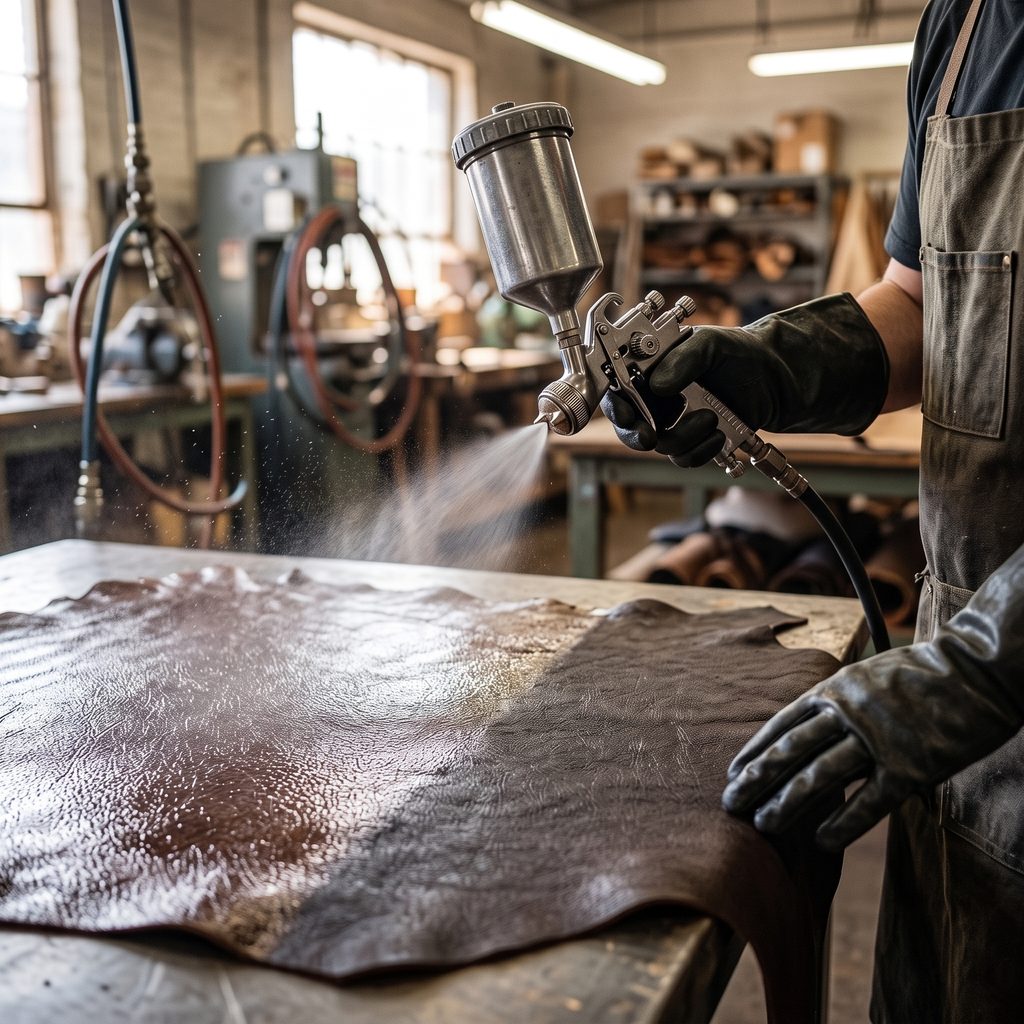
Leather finishing is built in layers. Base coats fill and even out the surface, color coats give the shade, and the top coat seals everything in. The top coat has four jobs:
- Set the gloss level, from a mirror shine to a soft matt look.
- Control the feel, so the leather feels smooth, waxy, or dry in the hand.
- Protect the surface against rubbing, scuffs, and light moisture.
- Stop sticking, so hides do not stick together when stacked or packed.
A weak top coat can undo all the good work underneath it. Even a perfect color coat will look cheap if the top layer is cloudy, tacky, or cracks after a few weeks of use.
Why tanneries use NC lacquers
NC lacquers are popular in leather finishing for practical reasons:
- They dry quickly, which keeps production lines moving.
- They give a clean, natural feel that many buyers prefer over heavier plastic-like coatings.
- They are easy to adjust. Gloss, flexibility, and touch can be tuned with plasticizers, matting agents, and feel modifiers.
- They are easy to repair. Small defects can often be touched up, because new lacquer bonds well to the old layer.
NC top coats are available as solvent-based lacquers and as water-based NC emulsions. Many tanneries now use emulsions where workplace rules or buyer requirements limit solvent use, while keeping the familiar NC feel.
Matching the lacquer to the leather
There is no single best NC lacquer for leather. The right choice depends on the final product.
| Leather article | What matters most | Typical NC top coat choice |
|---|---|---|
| Shoe upper | Flex resistance, rub resistance, polish response | Flexible, well-plasticized lacquer, medium to high gloss |
| Garment leather | Softness and natural feel | Soft-touch lacquer or emulsion, low gloss |
| Handbags and small goods | Look and scratch resistance | Medium to high gloss, harder film |
| Upholstery | Durability and a natural matt look | Matt lacquer, often combined with a tougher base |
Gloss. Glossy finishes use little or no matting agent. Matt and semi-matt finishes add silica-based matting agents to scatter the light. Getting this balance right is key to matching a buyer’s approved sample.
Flexibility. Leather bends constantly, especially in shoes. A lacquer that is too hard will crack at fold lines. Plasticizers keep the film flexible, but too much can make it soft and tacky.
Feel. Feel modifiers, such as waxes and silicone additives, change how the surface feels in the hand. This is often the deciding factor for fashion brands.
Common problems and their causes
- Cracking at folds: the film is too hard, or the coat is too thick. Use a more flexible grade or apply thinner layers.
- Tacky surface: too much plasticizer, or not enough drying time.
- Cloudy or milky finish: often moisture in the air during spraying, or the wrong thinner.
- Uneven gloss: inconsistent spray pressure or an unstable lacquer batch.
The thinner matters too. Using a cheap or mismatched NC thinner can cause blushing, slow drying, or poor flow, even with a good lacquer.
Testing before you scale up
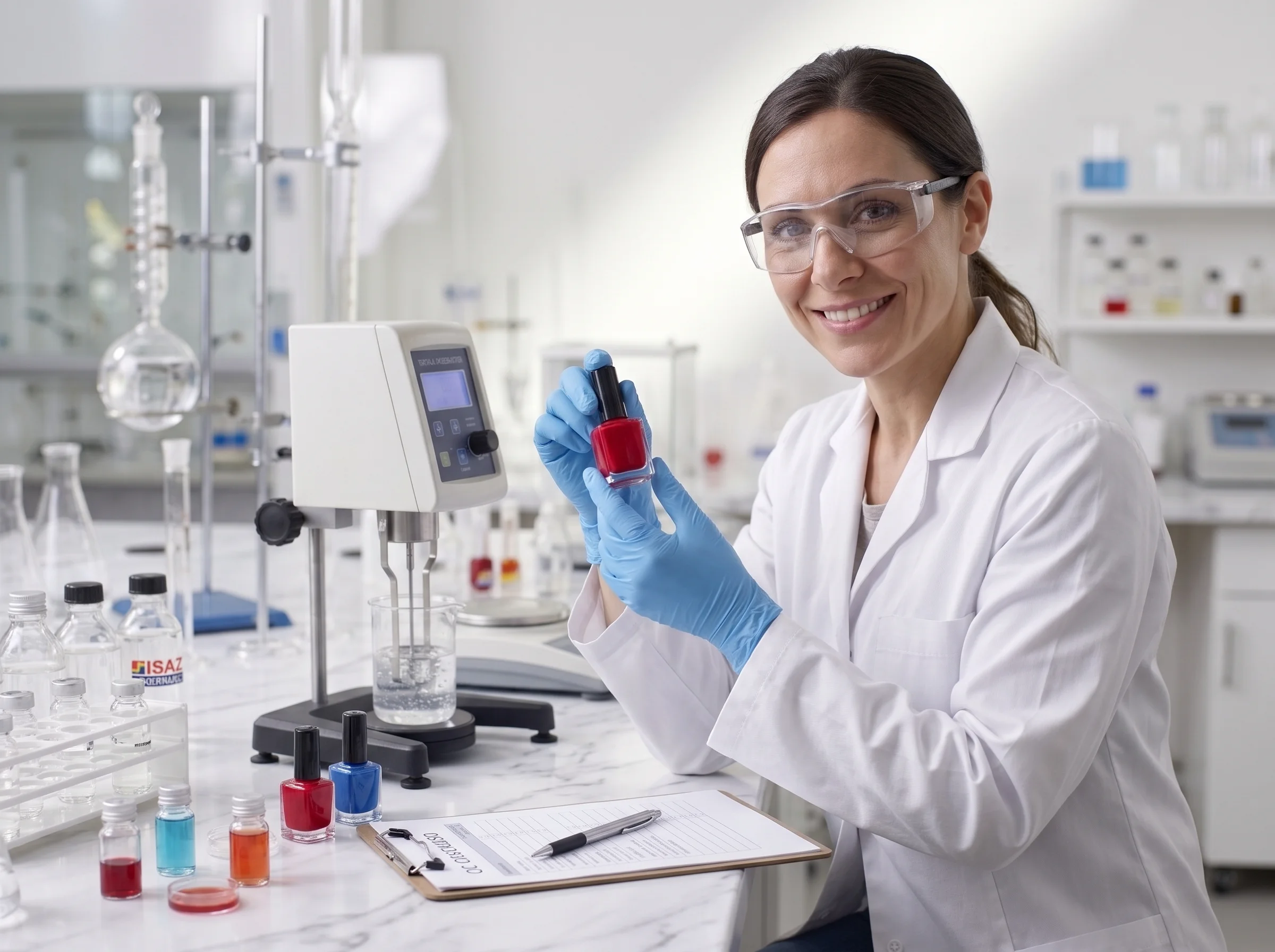
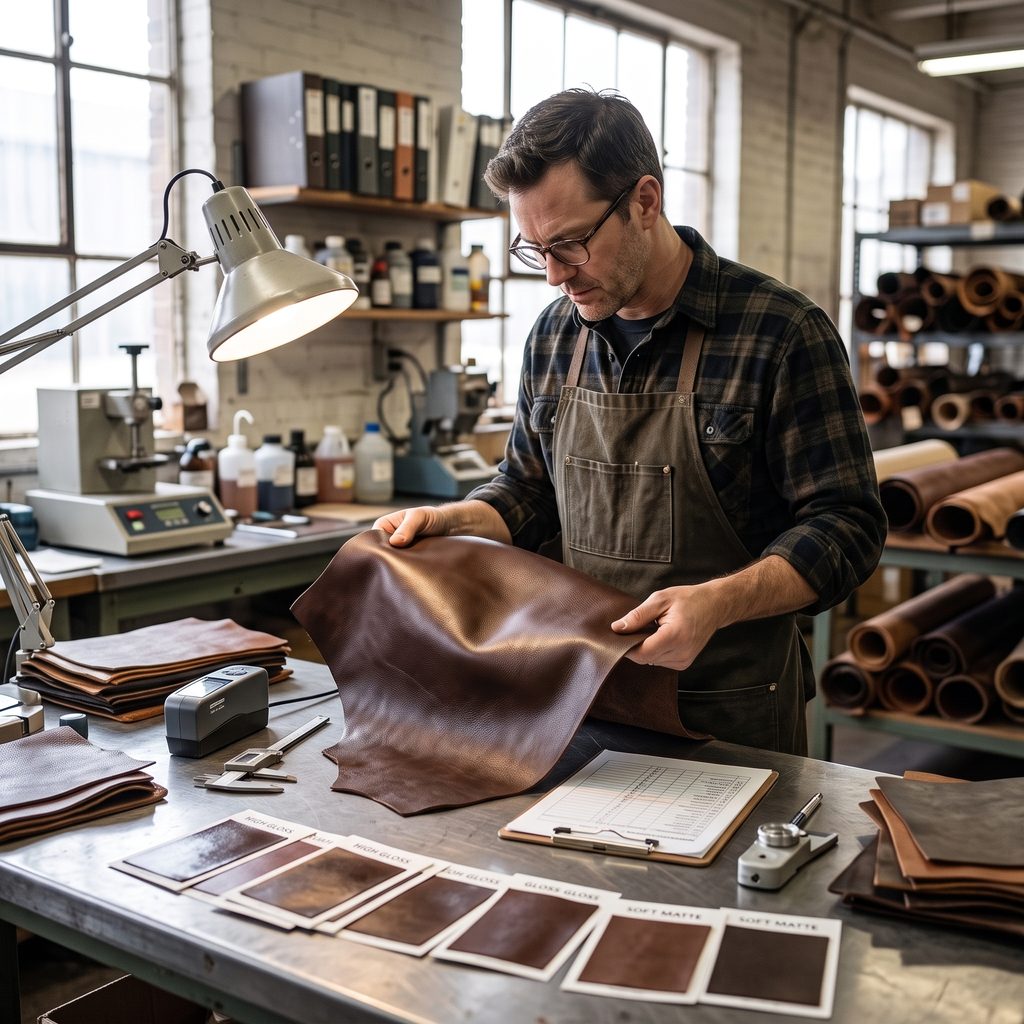
Before switching top coats on a full order, test on actual leather from your production. Useful checks include flex testing for shoe leather, rub fastness, and a simple stacking test to check for sticking. Ask your supplier for a technical data sheet and a sample, and run the trial under your normal spraying conditions.
NC lacquers for Pakistan’s leather industry
Pakistan is a major exporter of leather garments, gloves, footwear, and accessories. Export buyers expect the same finish order after order, so lacquer consistency is just as important as the lacquer itself.
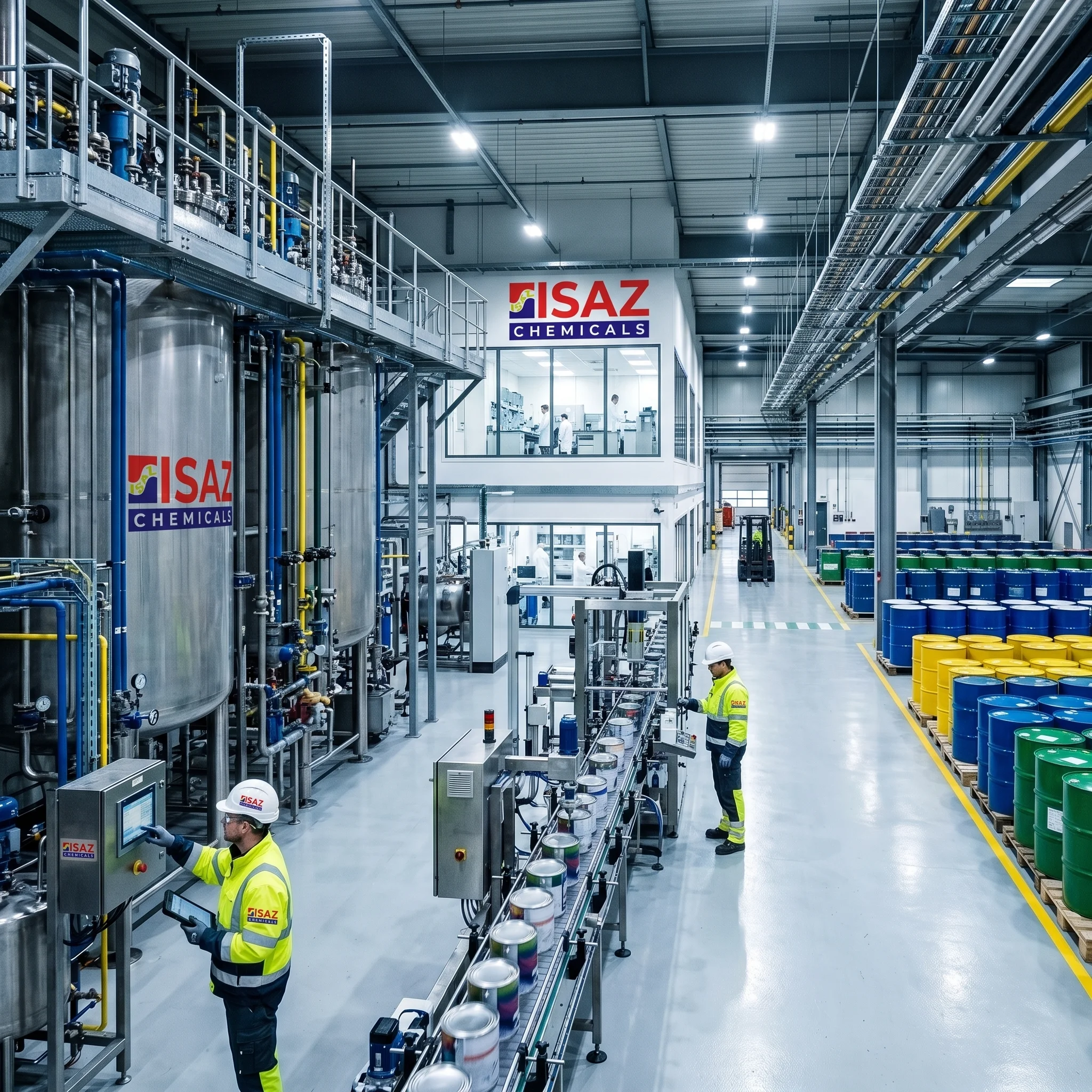
ISAZ Chemicals manufactures NC lacquers and thinners in Pakistan and tests every batch before dispatch. Whether you need a high-gloss top coat for shoe leather or a soft matt finish for garments, our team can help you match the right product to your article. Explore our Leather Finishing page or contact us for a sample.
Frequently asked questions
Is NC lacquer good for leather? Yes. It is one of the most widely used leather top coats, valued for quick drying, a natural feel, and easy adjustment of gloss.
How do I get a matt finish on leather? Use an NC lacquer with matting agents, and keep the coat thin and even. Your supplier can recommend a ready-made matt grade.
Why does my leather finish crack? Usually the top coat is too hard or applied too thick for how much the leather flexes. A more flexible lacquer usually fixes it.
Can NC lacquer be water-based? Yes. NC emulsions are water-based and give a similar feel with lower solvent use.