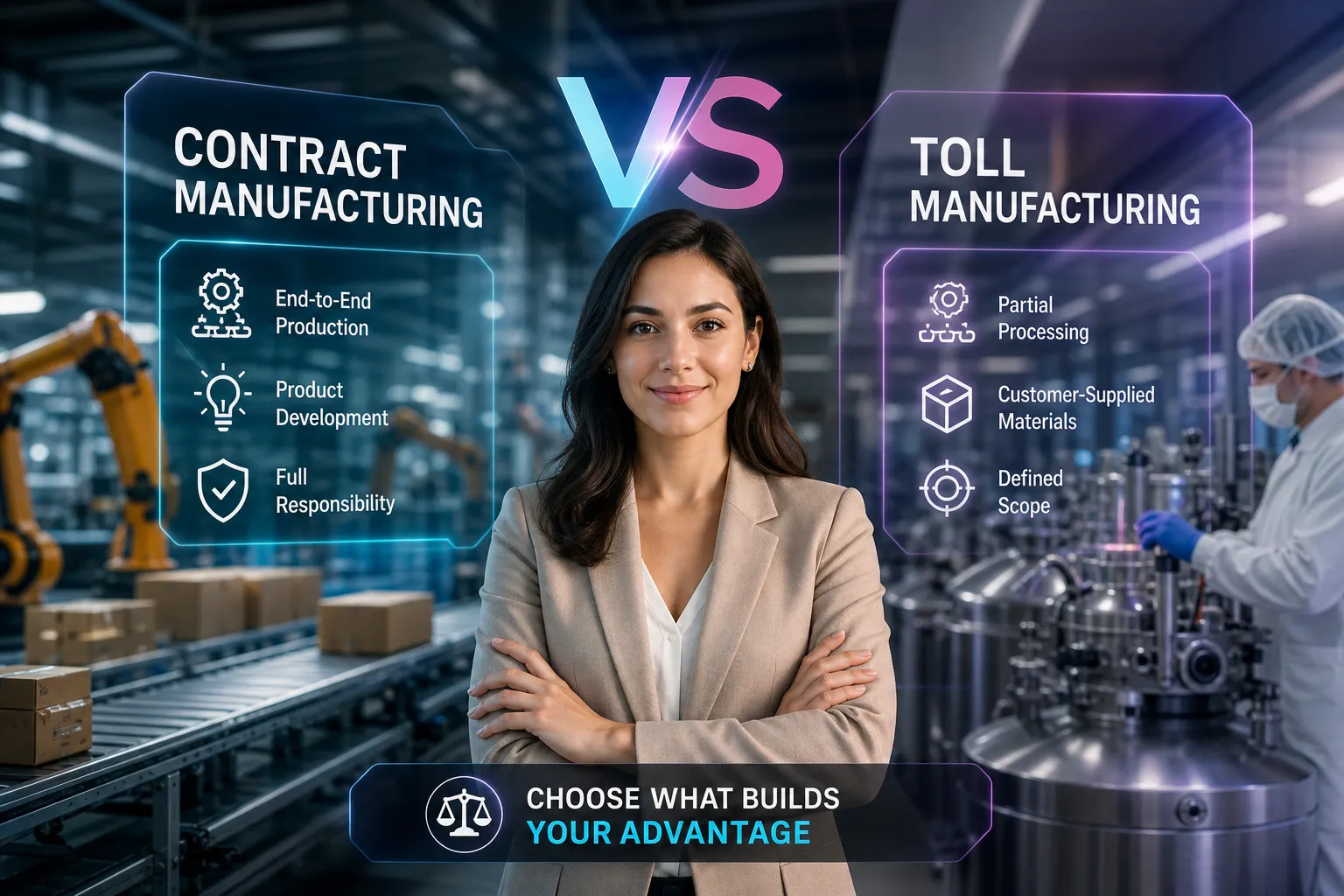
Choosing between contract manufacturing vs toll manufacturing comes down to one foundational question: who owns the materials during production? Toll manufacturing is a processing arrangement where you supply and retain ownership of the raw materials while the manufacturer provides the equipment, labor, and facility for a conversion fee. Contract manufacturing is broader, the manufacturer sources the inputs, runs production, and delivers a finished product under one agreement. Get that wrong, and you either overpay for control you don’t need or lose visibility over a formulation you spent years developing.
Both models exist because different businesses are at different stages. A company with a proprietary formula and established supplier relationships has different needs than a brand launching its first product without a tested recipe. ISAZ Chemicals, a certified contract chemical production partner operating since 1995, structures its toll manufacturing services to accommodate both arrangements, so clients can choose the model that actually fits their situation.
Key takeaways
• Material ownership is the dividing line: In toll manufacturing, you own the inputs throughout. In contract manufacturing, the manufacturer typically does until delivery.
• Pricing reflects responsibility: Toll processing uses a conversion fee; contract manufacturing bundles materials, labor, and margin into one finished-product price.
• IP protection differs significantly: Tolling keeps your formulation more tightly under your control. Contract manufacturing requires explicit contractual IP allocation to achieve the same protection.
• Risk follows ownership: Commodity price swings and inventory carrying costs sit with whoever owns the materials, which is usually you in a tolling arrangement.
• Neither model is cheaper by default: A true cost comparison must use total landed cost, including materials, freight, working capital, and coordination overhead.
What actually separates these two production models
In toll processing, you purchase, own, and ship the raw materials to the facility. The manufacturer never takes title to those inputs. They receive your materials as a custodian, convert them according to your instructions, and return or ship the finished goods. The toll manufacturer is paid only for that conversion service, not for selling you a product.
In a contract manufacturing agreement, the manufacturer typically sources and owns the materials until delivery. You receive a finished product, and title transfers at a defined point in the agreement. The manufacturer manages procurement, carries inventory risk, and may handle packaging, testing, and logistics as part of an integrated service.
Formula and process control follows the same logic. In a tolling arrangement, you hold the formulation and master specifications. The toll manufacturer executes your instructions. In contract manufacturing, the manufacturer may have input into or full control over the process design, which carries significant IP implications. If your product’s value lives in its formula, that distinction is not a minor detail.
Contract manufacturing vs toll manufacturing: cost structures and financial risk
Conversion fees in toll processing
Toll manufacturing is priced on a conversion or processing fee: per batch, per kilogram, or per equipment hour. You pay separately for materials. That structure gives you clear visibility into exactly what conversion costs, which is valuable when you already negotiate favorable raw-material pricing or want to benchmark your manufacturer’s efficiency over time.
Bundled pricing in contract manufacturing
Contract manufacturing bundles materials, labor, overhead, packaging, and margin into one finished-product price. That’s simpler to manage, but you lose direct insight into individual cost components. When commodity prices shift, you’re dependent on the manufacturer’s transparency about what’s driving price changes.
Material and inventory risk sits with whoever owns the inputs. In toll processing, that’s you. You absorb commodity price swings, supply disruptions, and inventory carrying costs. In contract manufacturing, the manufacturer takes on those risks and typically adds a margin premium to cover them. Neither arrangement is inherently cheaper. The only valid comparison is total landed cost: materials, freight, working capital, yield losses, QA overhead, and coordination effort all included.
Contract manufacturing vs toll manufacturing: IP and compliance
When comparing tolling vs contract manufacturing from a regulatory and intellectual property standpoint, the differences are just as significant as the cost distinctions. In a tolling arrangement, you supply the formulation and retain structural control over it, the manufacturer never needs access to your full process design. In a contract manufacturing agreement, explicit contractual language must allocate IP ownership, process rights, and confidentiality obligations. Without that clarity, disputes over who owns a jointly refined formulation can become costly.
Compliance responsibility follows a similar split. In toll processing, you own product compliance while the manufacturer owns site compliance. In contract manufacturing, responsibility is shared, with the manufacturer bearing broader operational accountability. For companies working with regulated or controlled chemistries, where co-packing or co-packer relationships may also come into play, understanding this division before signing is critical.
Side-by-side: contract manufacturing vs toll manufacturing at a glance
| Criteria | Toll manufacturing | Contract manufacturing |
| Who supplies raw materials | Client | Manufacturer |
| Who owns materials during production | Client retains ownership throughout | Manufacturer owns until delivery or acceptance |
| Pricing model | Conversion fee (per kg, batch, or equipment hour) | Bundled finished-product price |
| Client’s operational control | High: client controls formula, specs, and inputs | Lower: more delegated to manufacturer |
| IP and formulation ownership | Clearer: client supplies and controls the formulation | Requires explicit contractual allocation |
| Compliance and regulatory responsibility | Client owns product compliance; manufacturer owns site compliance | Shared, with manufacturer bearing broader operational responsibility |
| Best suited for | Proven formulas, established supplier relationships, proprietary inputs | New products, limited supplier access, turnkey manufacturing speed priority |
The table tells you what differs. What it can’t capture is why it matters for your specific decision. If your competitive advantage is your formula, the toll model protects it structurally. If your competitive advantage is speed to market and you don’t yet have supplier relationships, contract manufacturing removes barriers you haven’t built the infrastructure to manage yet.
Which model fits your business right now?
Toll manufacturing makes more sense when you already own a proprietary formula you aren’t willing to share at the process level. It’s also the stronger fit when you source your own raw materials at favorable contract prices, when you want maximum production control without building a facility, or when you’re scaling an existing product with proven inputs and predictable yields. You’re essentially buying processing capacity, nothing more.
A contract manufacturing agreement delivers more value when you’re launching a new product without a tested formulation, when you lack established supplier relationships for the required raw materials, or when a single point of accountability from input to finished product is worth paying a margin premium. It’s also the practical choice when lead time is the constraint and you need turnkey manufacturing speed over cost transparency.
Choosing the right partner regardless of the model
The right answer depends on where you are in that equation, how much control you need over inputs and formulation versus how much operational responsibility you’re prepared to hand off. Once you’ve made that call, the partner you choose determines whether that model actually delivers what it promises.
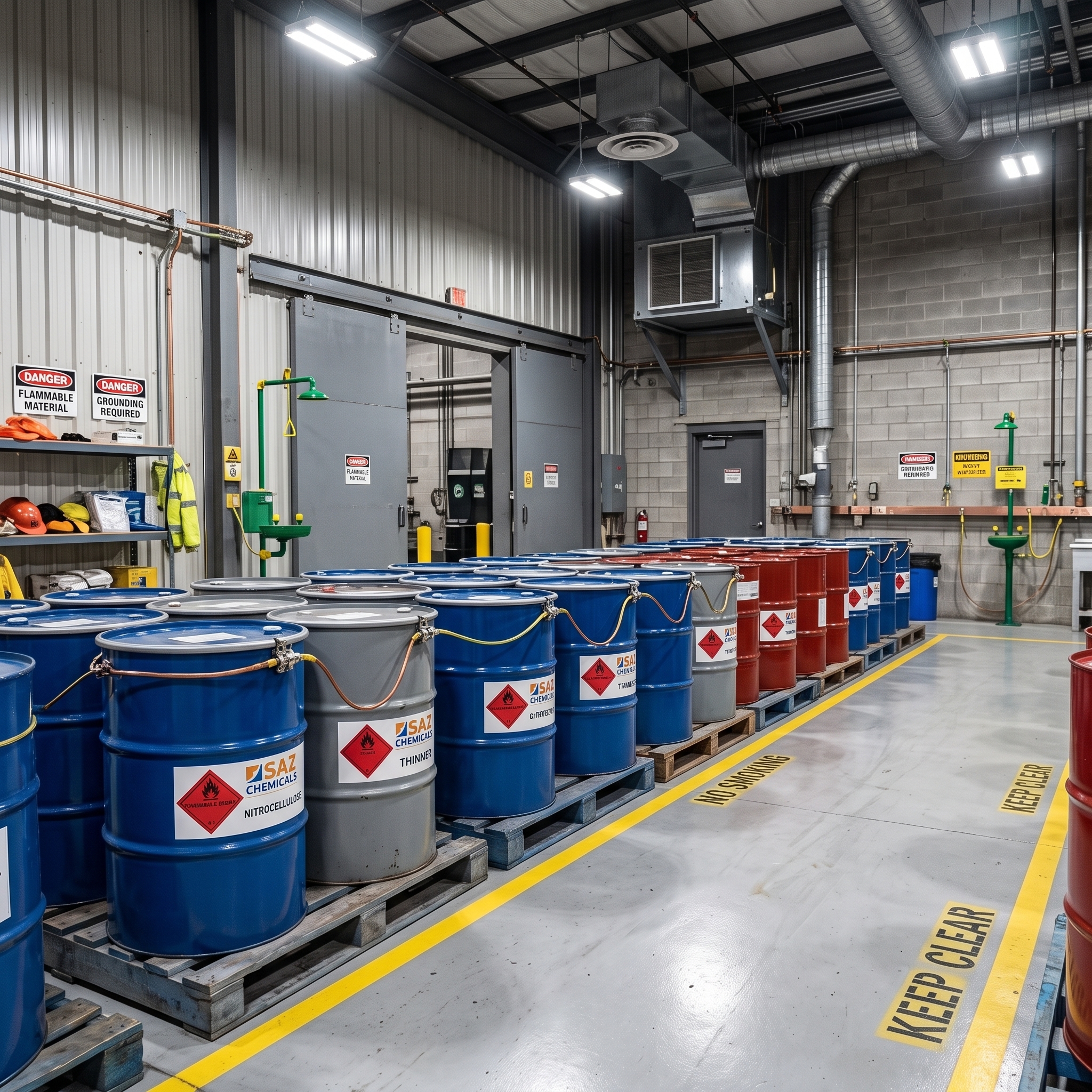
ISAZ Chemicals is structured to support both arrangements at scale. With ISO and EcoVadiscertifications and rare regulatory licenses from the Explosive, Anti-Narcotics, and Environmental Departments, ISAZ is one of the few toll manufacturers in Pakistan legally equipped to handle controlled chemistries like Nitrocellulose at production volumes that matter.
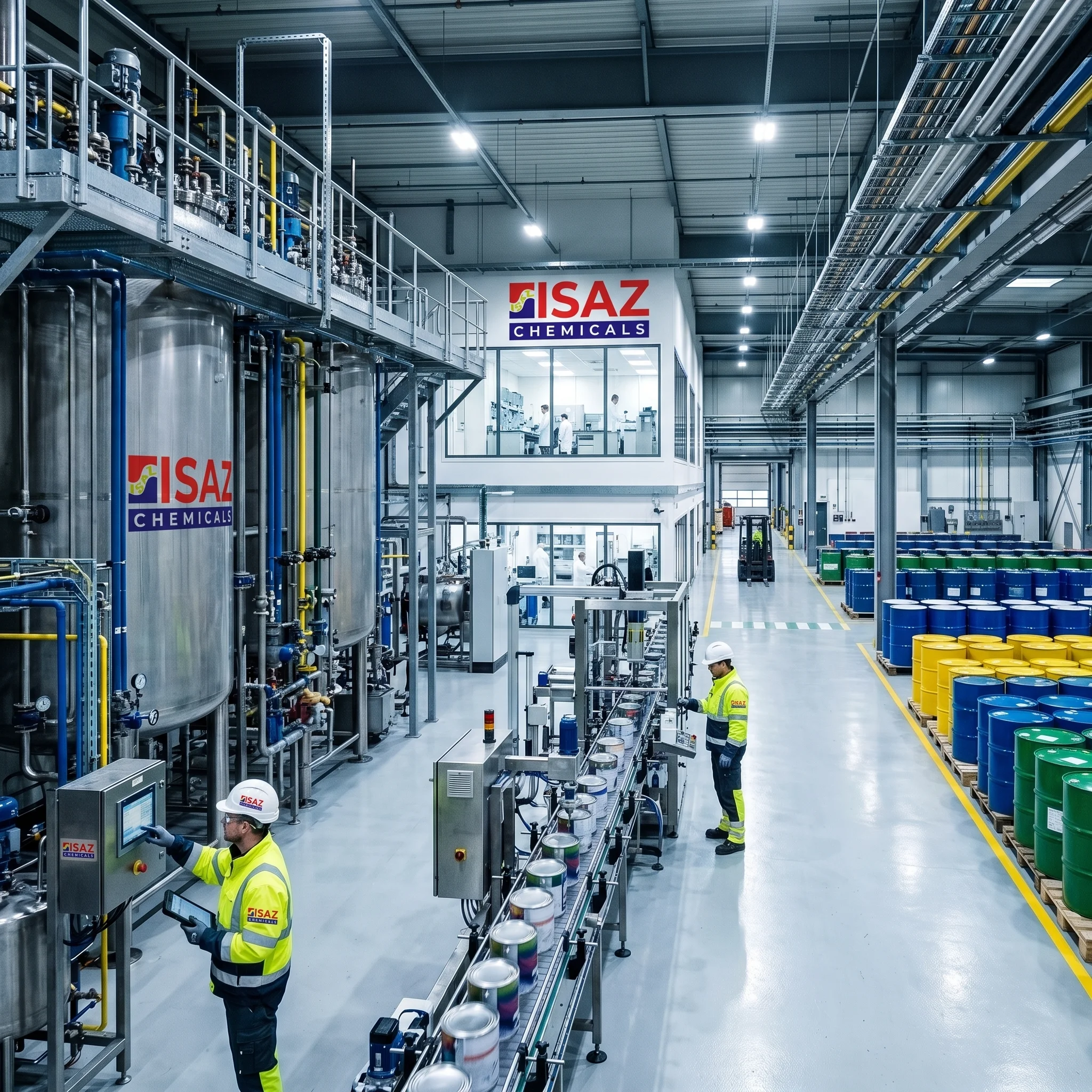
Whether you bring your own raw materials or need end-to-end production management, the infrastructure and compliance framework are already in place. Global brands including Nippon Paint, AkzoNobel, and DIC Paint have relied on this setup to produce millions of kilograms annually without committing capital to their own facilities in South Asia.
If you’re evaluating contract manufacturing vs toll manufacturing for your current stage, or you’re ready to discuss a specific volume and chemistry requirement, reach out to our team directly. The options are straightforward once you know where your priorities sit, and we can help you determine which arrangement gives you the most production leverage for where your business is right now.
Frequently Asked Questions
Can toll manufacturing actually protect my product formulation and IP?
Yes, toll manufacturing keeps your formulation and master specifications under your control and better protects your IP. I retain structural control because the toll manufacturer never takes title to inputs and only executes my instructions, reducing the need to share full process design.
Who is responsible for regulatory compliance and site issues under each model?
Compliance responsibility depends on the model: in toll processing I own product compliance while the manufacturer owns site compliance, whereas in contract manufacturing responsibility is shared with the manufacturer bearing broader operational accountability. I must understand that for regulated or controlled chemistries this division is critical before signing an agreement.
How should I compare the true cost between contract and toll manufacturing?
Compare total landed cost, not just unit price, to get a valid comparison between models. I include materials, freight, working capital, yield losses, QA overhead, and coordination effort when assessing whether conversion fees plus separately bought inputs or a bundled finished-product price is cheaper.
Is ISAZ Chemicals equipped to handle regulated or controlled chemistries at scale?
Yes, ISAZ Chemicals is legally equipped and certified to handle controlled chemistries at production volumes that matter. I note that ISAZ holds ISO and EcoVadis certifications and rare regulatory licenses from the Explosive, Anti-Narcotics, and Environmental Departments, and has produced millions of kilograms annually for global brands.e